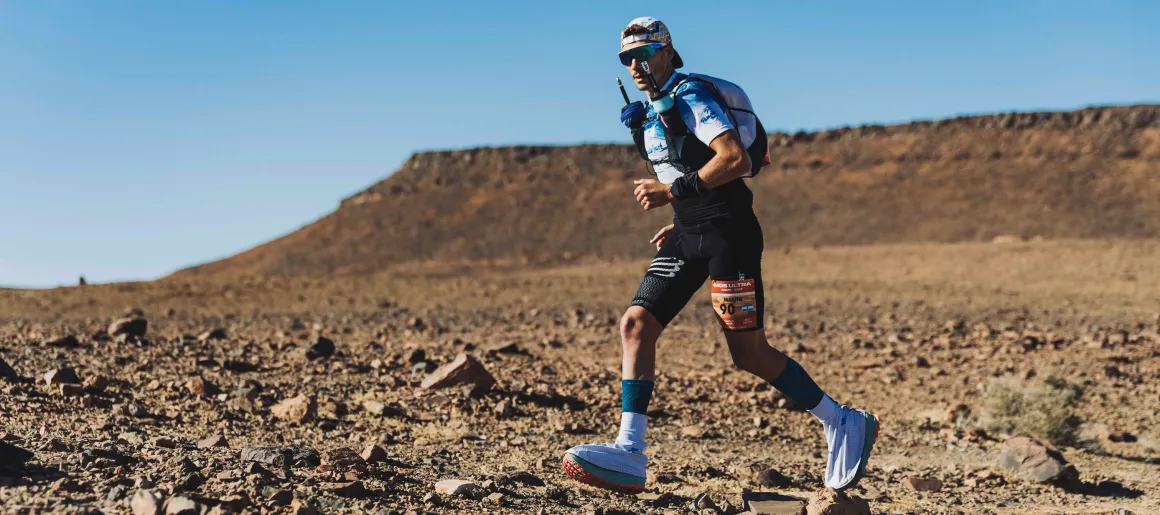
On January 9, 2026, I stepped onto the start line of my first 100-mile ultra in the Moroccan desert.
Eighty of us stood there in silence, packs loaded with everything we would need to survive. Food for the entire race. Mandatory gear. Basic self-sufficiency. More than 10 kilos on our backs. The desert stretching out in every direction.
Around 50 of us would make it to the finish.
This was my first Marathon des Sables. My first time in the desert. And my way of closing my 29th year before turning 30.
But the real story started long before Morocco.
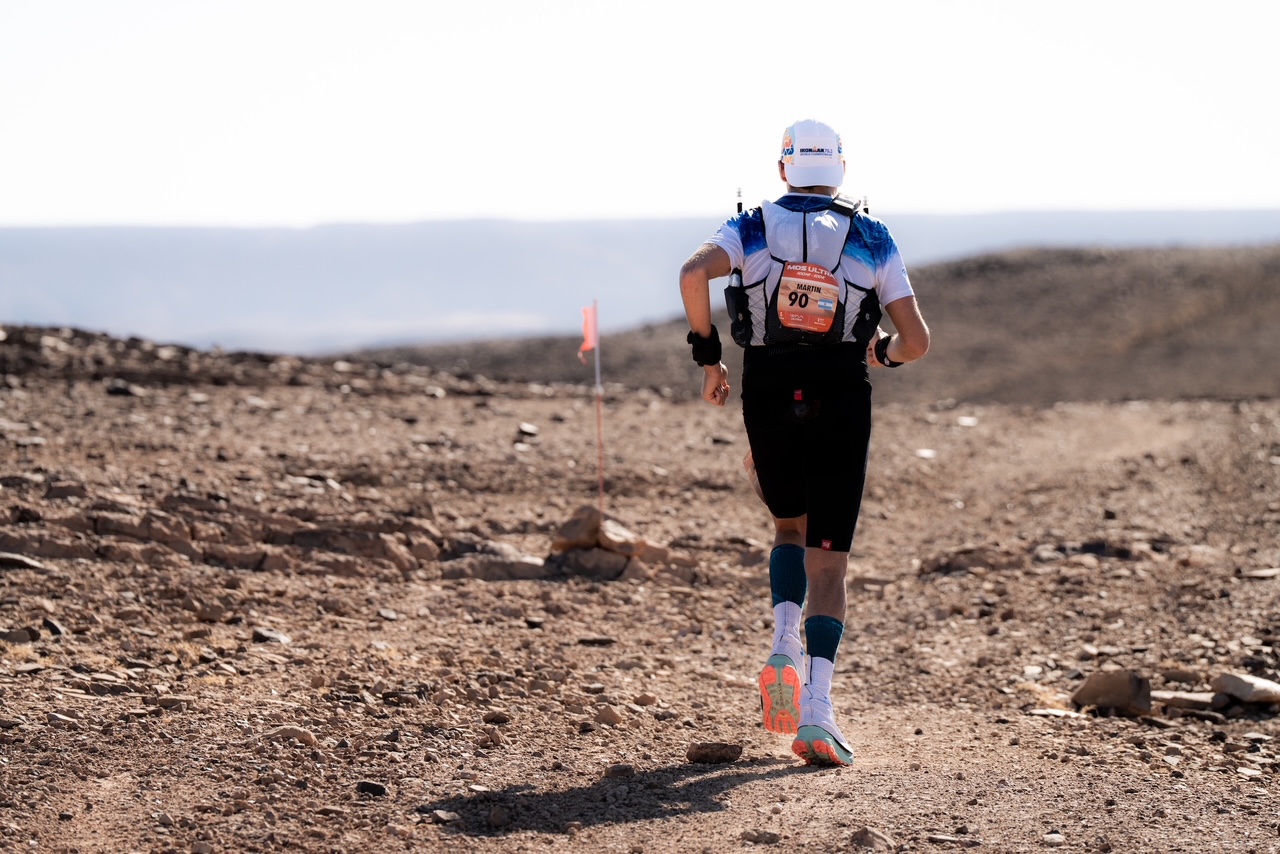
The Unfinished Kilometer
I had attempted 100 miles once before.
That race ended at kilometer 135. My body shut down. My mind followed. I stopped.
That number stayed with me. Not dramatically. Not loudly. Just quietly present — like something unresolved.
I didn't go to Morocco for ranking or recognition. I didn't go chasing a position. I went because 100 miles demand something you cannot simulate in training.
They demand time. They demand stillness inside movement. They demand that you stay when everything in you wants to leave.
You can fake intensity. You can fake speed. You cannot fake endurance over 19 hours.
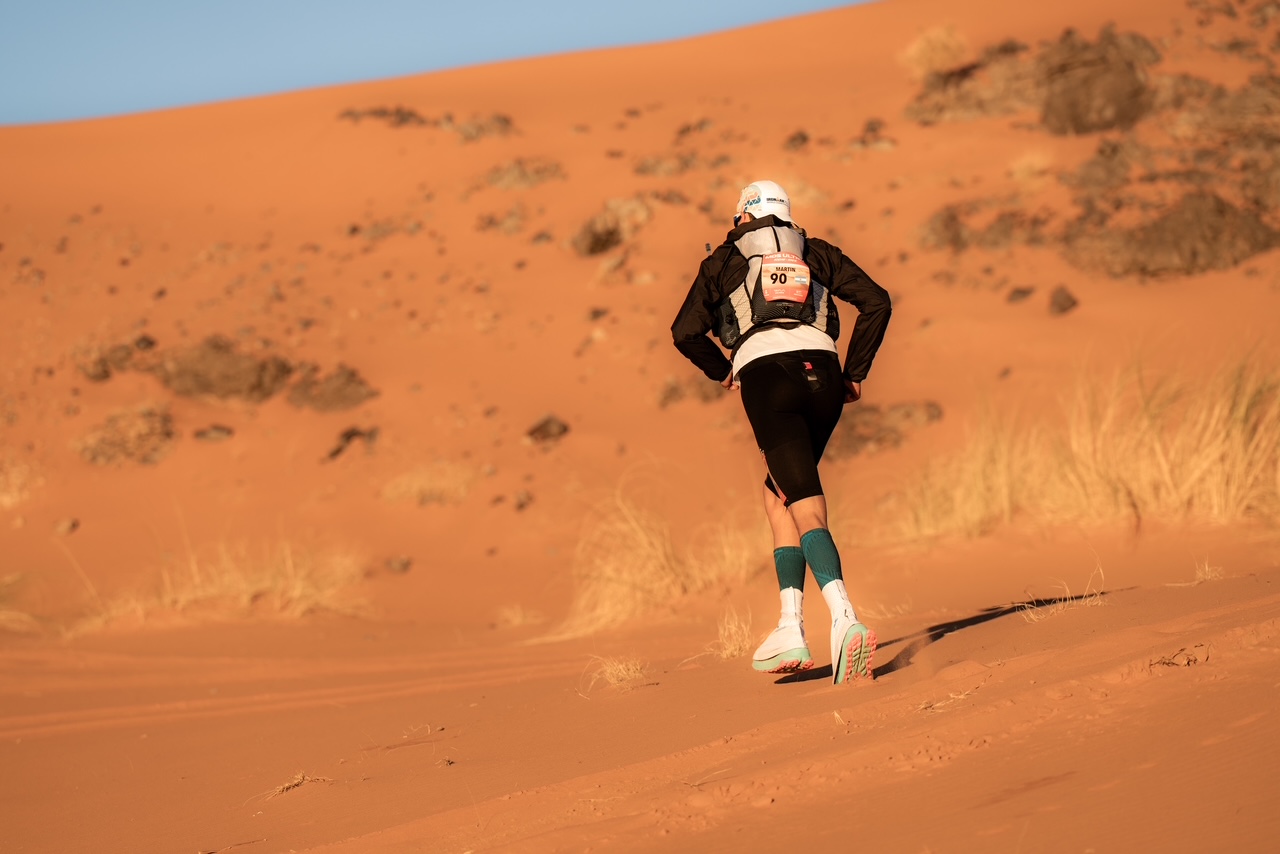
The Desert Was Not What I Imagined
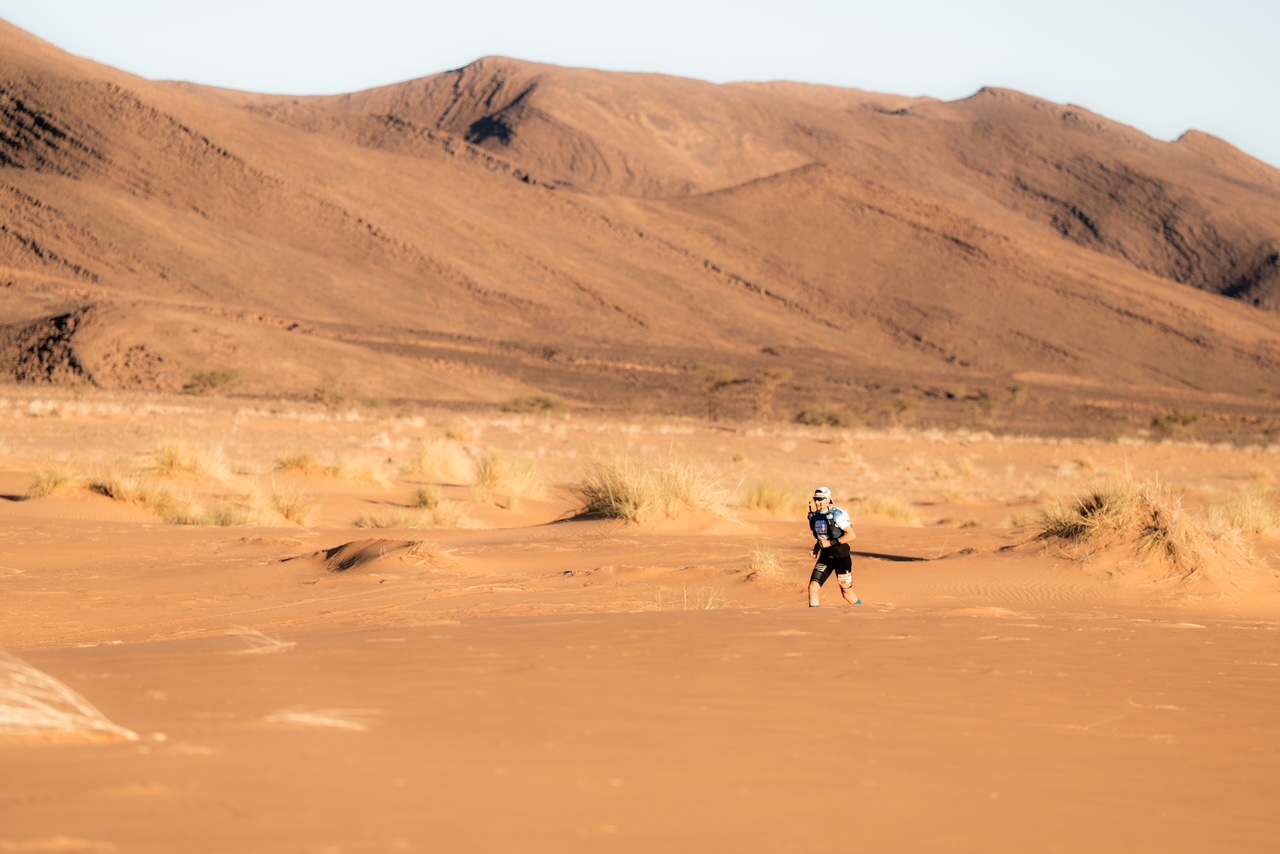
Before arriving, I pictured heat. Brutal sun. Endless dunes burning under my feet.
Instead, we ran in 13–15°C during the day. At night, temperatures dropped below freezing.
The cold was the first surprise. The second was the silence.
The desert wasn't violent. It was vast. It didn't scream — it absorbed. Sound, thought, ego. Everything felt small against that landscape.
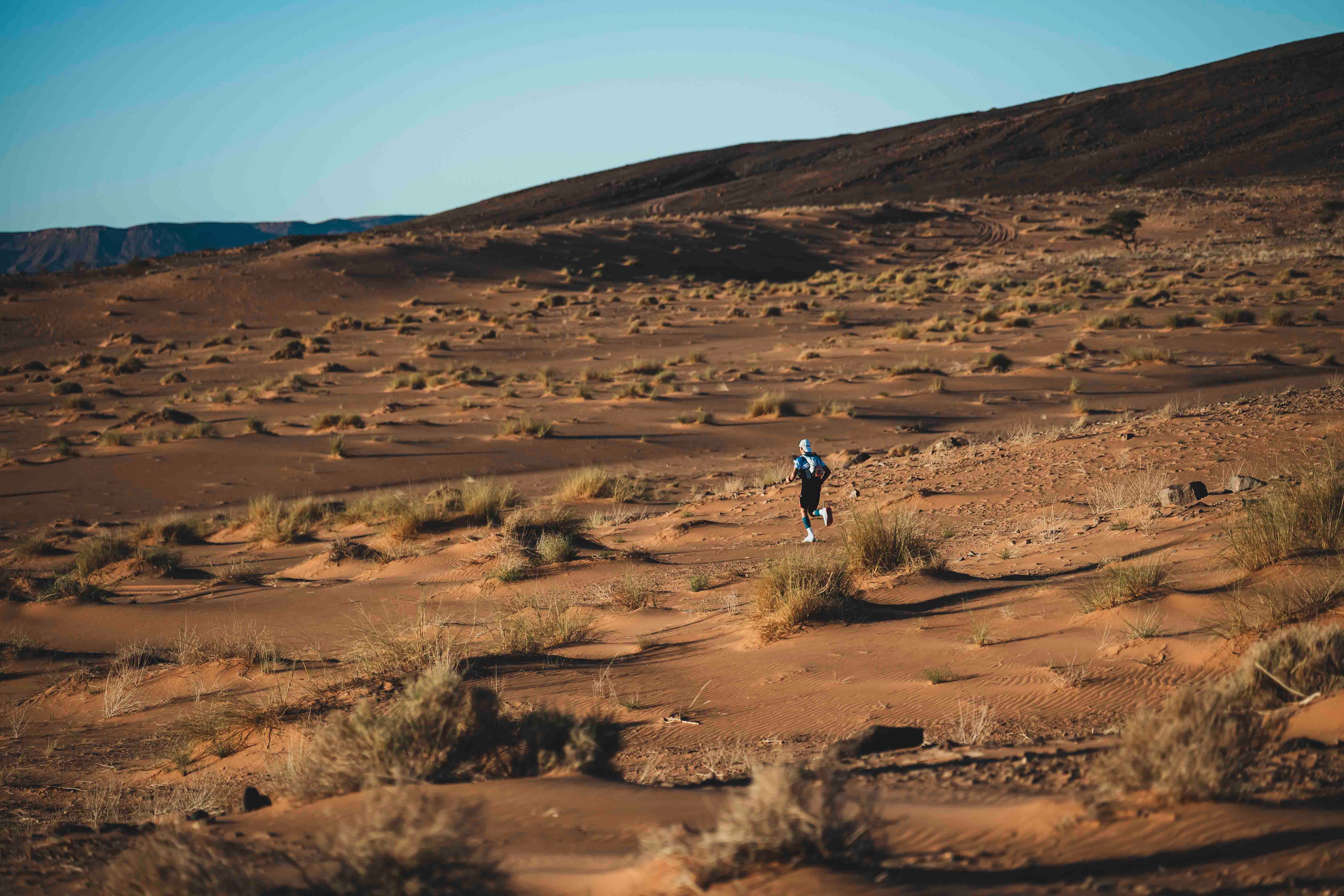
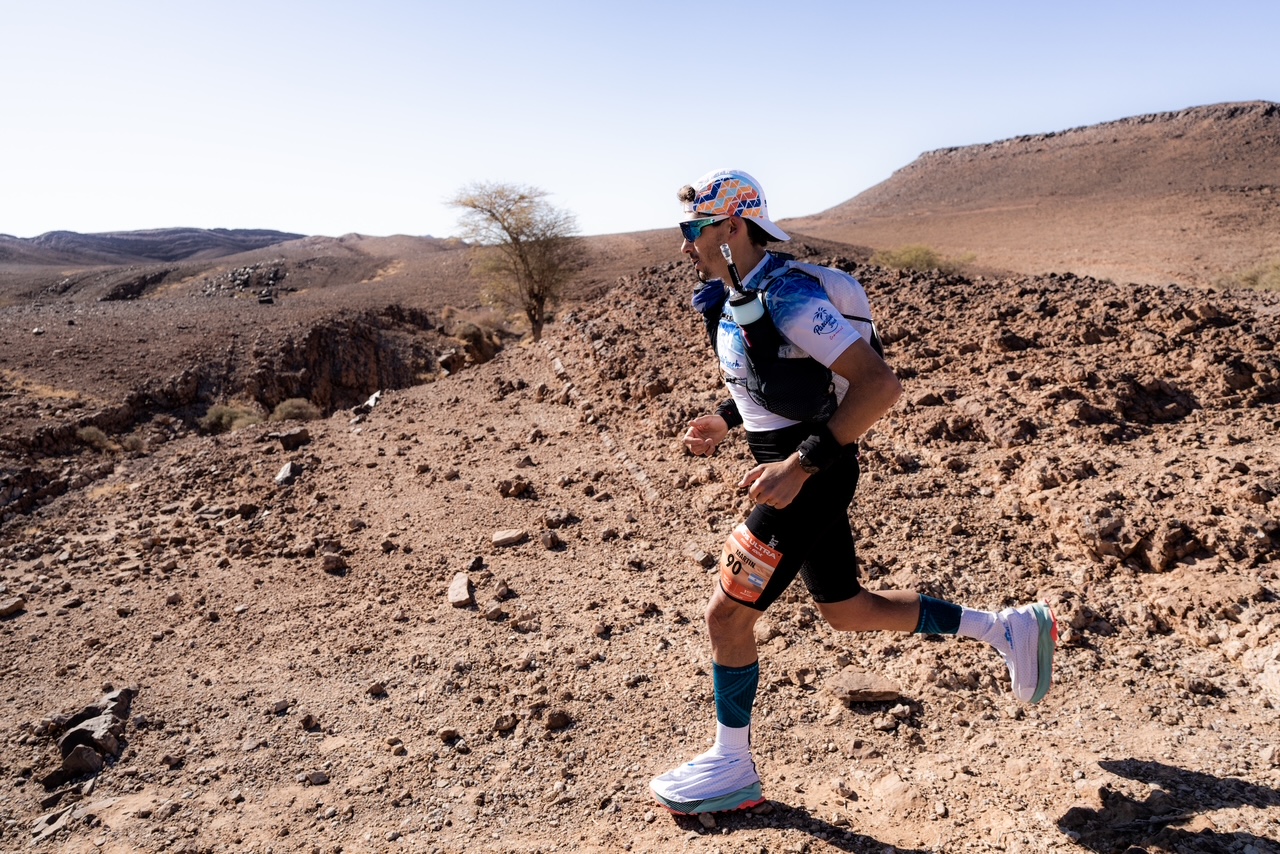
I train in Cozumel — humid air, flat roads, constant wind coming off the Caribbean. Arriving in Morocco and running across deep sand and jagged rock felt almost ironic. Two opposite environments. Two opposite energies. And yet both expose you in their own way.
Self-Sufficiency Changes the Game
Carrying everything shifts your relationship with movement. Every gram matters. Every decision echoes hours later.
Water every 10 miles. No more.
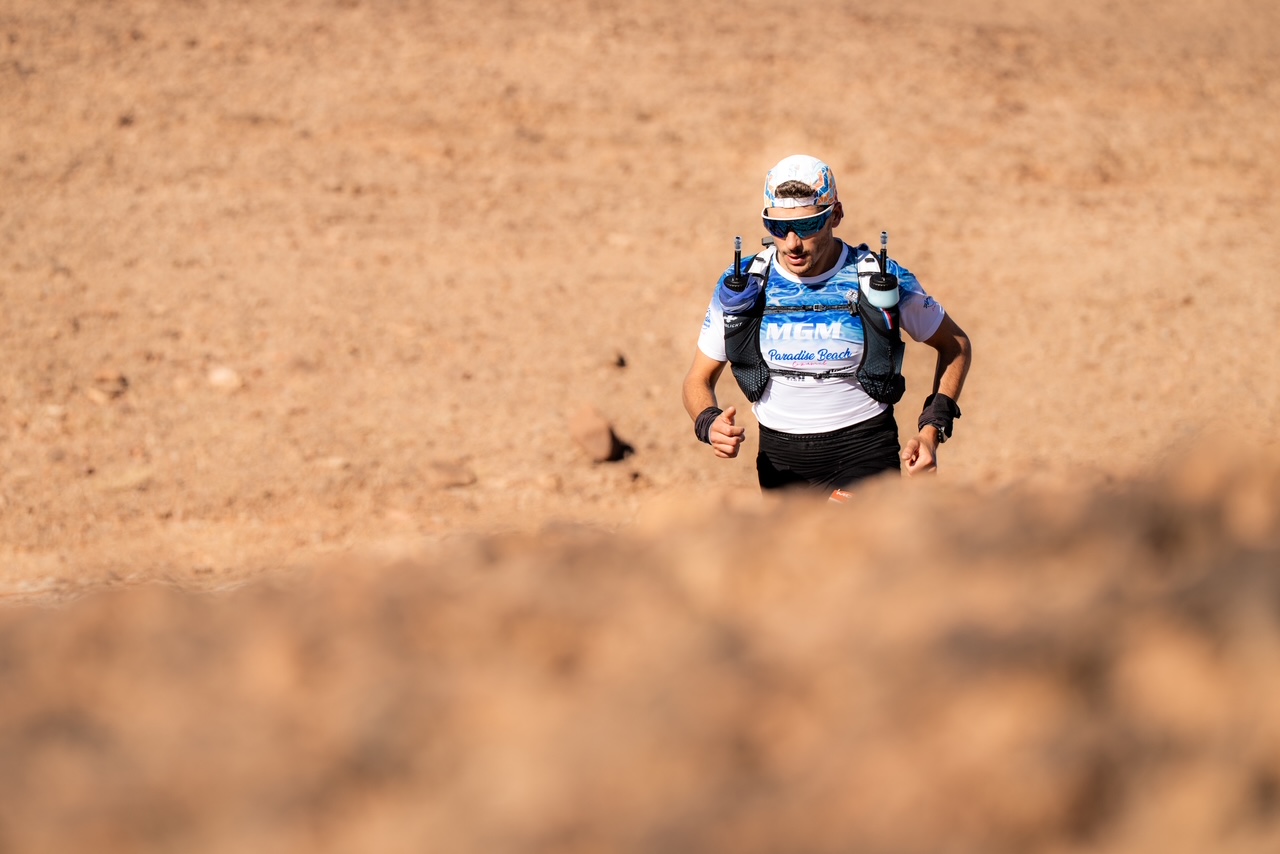
My neck began to ache first. Then my hips tightened under the load. My breathing became uneven — not from pace, but from fatigue settling into the spine.
I didn't get blisters. My feet held. But there came a moment when walking felt impossible.
Kilometer 135 — Again
It was below freezing.
The same number that had ended my first attempt arrived quietly this time. No drama. Just the slow realization that my body was no longer responding the way I needed it to.
My hips were done. My back and neck felt wrecked. My breathing wouldn't synchronize.
I vomited from the pain.
At the aid station, I genuinely believed I was finished. I wanted it to stop. I wanted relief more than accomplishment. I was convinced the remaining miles would feel exactly like that — and worse.
I lay down on the ground.
Two and a half hours passed. Barely moving. Half asleep. Medical staff checking on me. The desert night pressing in. That was the lowest point. There was no surge of motivation. No cinematic breakthrough. Just stillness and doubt.
You Cannot Outrun Time
What I learned there is something shorter races don't teach: you cannot outrun time.
My mind wanted to accelerate the suffering — to run faster so it would end sooner. But pain doesn't respond to urgency. The more I tried to escape it mentally, the heavier it became.
One hundred miles unfold at their own pace. Time doesn't negotiate.
After two hours and thirty minutes on the ground, I didn't stand up to race. I stood up to walk. Just walk. No heroics. No comeback music in my head. Just one step.
And slowly, something returned — not strength, not speed. Perspective.
I stopped trying to finish. I focused on continuing.
What the Desert Leaves Behind
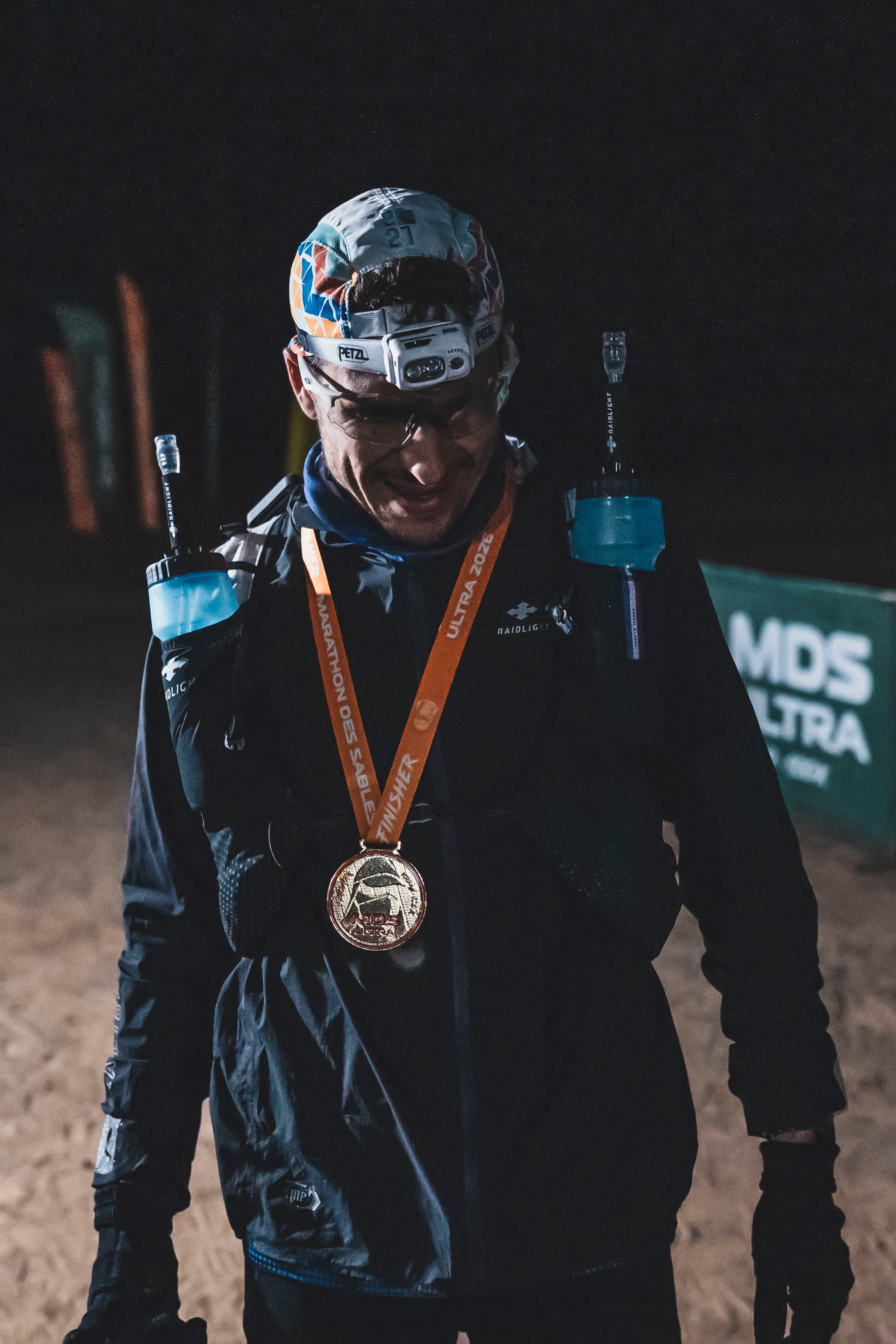
By the time I crossed the finish line — 19 hours and 30 minutes after we started — I didn't feel an explosion of emotion.
I felt quiet.
The victory wasn't the medal. It wasn't the time. It was knowing that kilometer 135 no longer owned me.
The desert makes you small. It strips distraction. It forces you to sit with yourself in ways modern life rarely allows. No notifications. No noise. Just breath, steps, horizon.
We started as 80. Around 50 finished. But what stayed with me most wasn't the statistic — it was the days before the race. Conversations in the hotel. Runners from around the world sharing stories. The collective understanding that we were all about to enter something bigger than performance.
Marathon des Sables is not just a race. It's a confrontation.
The Results are in....Martin wins first time out in the Desert!
What a truly remarkable effort. Just finishing such a race is an amazing achievement but to come first, well it truly is the things dreams are made of.
From a flat Caribbean island to one of the most silent deserts on earth.
Some journeys change your physiology. Others change your identity.
This one changed both.